
Loading...
Serving West Lafayette, IN and surrounding areas. (765) 637-4857
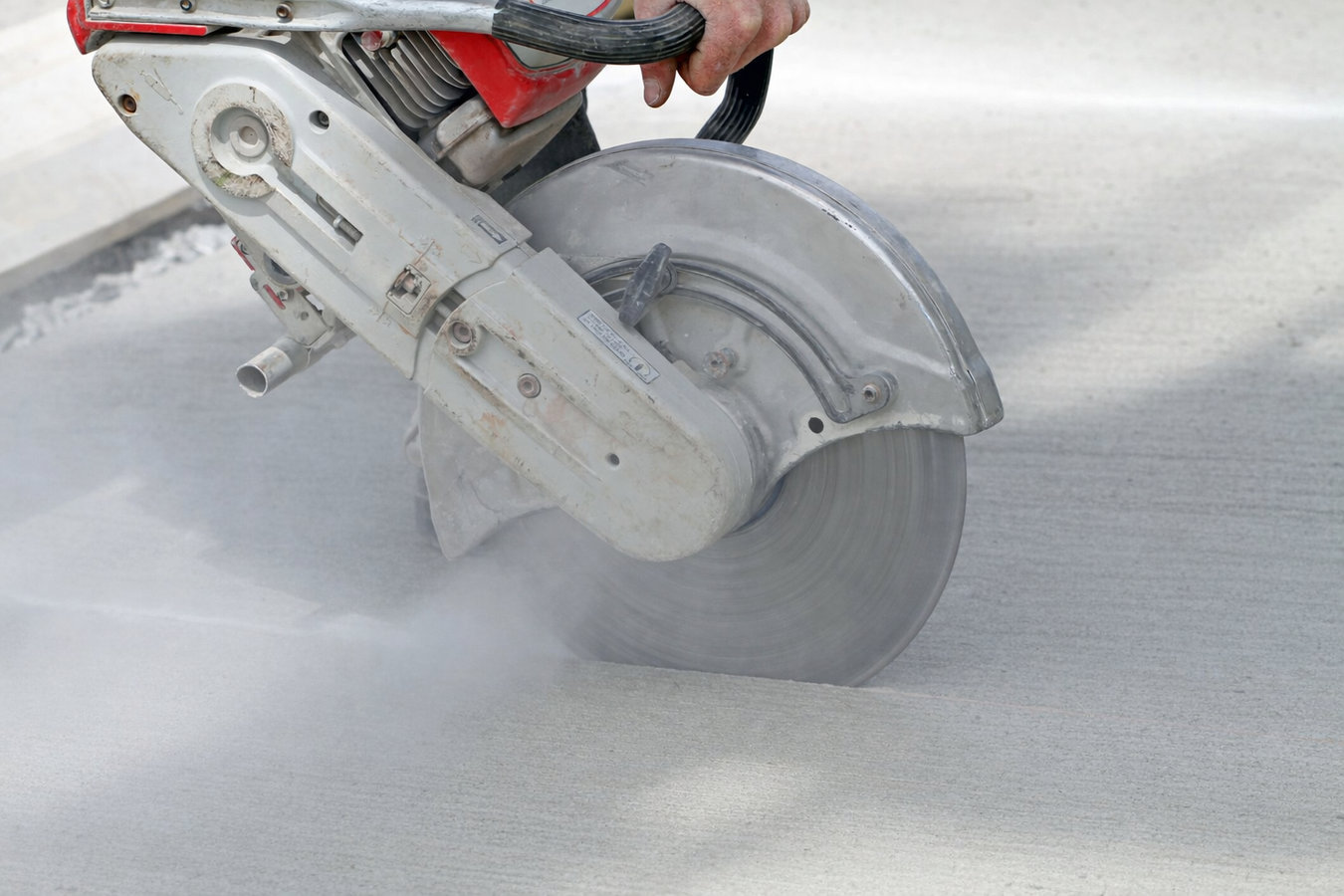
Whether you need a section removed, a drain opening cut, or a utility trench in your basement floor, diamond-blade cutting gives you a straight, controlled result. We handle permits, locate utilities, and manage dust so the job is done right the first time.
Concrete cutting in West Lafayette uses diamond-tipped saw blades to slice through hardened concrete cleanly and precisely, creating openings for drains, utilities, or doorways, removing damaged sections, or cutting control joints - most straightforward residential jobs completed in a single day with the cut area ready for the next phase of your project.
A diamond-blade saw grinds through concrete rather than breaking it, which is why you get a straight edge without cracks radiating outward into the surrounding slab. This matters more in West Lafayette than in warmer climates because the clay-heavy soil under most slabs here moves with every wet spring and dry summer. A jagged break from a jackhammer leaves the surrounding concrete more vulnerable to that movement. A clean saw cut gives the repair or the new concrete a stable, well-defined boundary to work against.
If your project involves lifting a settled slab before or after cutting, our concrete floor installation service handles new pours after sections are removed, and we coordinate both steps when a project requires them in sequence.
If you have patched a crack before and it reappeared within a season or two, the underlying slab has likely shifted enough that surface patching will not hold. In West Lafayette, the combination of clay soil movement and repeated freeze-thaw cycles means this pattern is common in homes more than 20 to 30 years old. Cutting out the damaged section and replacing it properly is often the only fix that lasts.
If water collects against your house after a heavy rain, your concrete flatwork may have settled or tilted toward the foundation rather than away from it. This is a drainage problem that can lead to basement water intrusion - a real concern in West Lafayette given the area's clay soils and seasonal rainfall. Cutting and re-grading the affected section can redirect water away from your home before it causes bigger damage.
Any time you need to run a new pipe, install a basement drain, or create an opening in a concrete floor or wall, concrete cutting is the right tool. Trying to break through concrete with a sledgehammer creates unpredictable cracking that can compromise the surrounding slab. A saw cut gives you a clean, controlled opening that is easier to seal and finish afterward.
If you can feel a bump or a step when you walk across your driveway or basement floor, the slab has moved - likely because the soil beneath it shifted. In West Lafayette's clay-heavy ground, this kind of movement is especially common after a wet spring followed by a dry summer. Cutting out the affected section is typically the first step in leveling and repairing it properly.
We cut concrete for driveway section removal, basement floor openings, utility trenches, control joint cutting, and slab demolition in preparation for new pours. Before any job is scheduled, we visit the property to assess slab thickness, check for reinforcement, identify utility lines in the cut path, and determine whether the project requires a permit from the City of West Lafayette. For work involving the public sidewalk strip or structural elements like basement walls, permit handling is included as part of our process.
West Lafayette's older concrete - much of which was poured in the 1950s through 1980s - often has variable mix quality and older rebar patterns that affect how cutting proceeds. We ask about your home's age and history before quoting and adjust our approach to match what we find. When a cut section is removed and the base underneath needs to be corrected before new concrete is poured, we handle that preparation as part of the scope, not as an add-on discovered after work starts. If the project connects to a broader driveway rebuild, we coordinate cutting and new pours in a single mobilization when scheduling allows.
Cuts out a specific damaged panel cleanly so only the affected area is removed and replaced, leaving the surrounding driveway intact.
Creates clean, straight openings in basement slab concrete to install floor drains, sump pits, or plumbing access - the right first step before any waterproofing work.
Cuts linear trenches for running new gas, electric, or water lines under existing concrete - common in older West Lafayette homes being updated.
Cuts new control joints into existing slabs to give concrete a predictable place to crack rather than cracking randomly across the surface.
West Lafayette homeowners deal with concrete problems more often than homeowners in many other Indiana cities because of how the local soil behaves. The clay-heavy glacial soils under most residential slabs here expand when they absorb moisture in spring and contract when they dry out in summer. Freeze-thaw cycles from late November through March - sometimes cycling multiple times in a week - force water into small cracks and widen them a little more each time. Over 20 or 30 years, that process turns hairline cracks into sections that need to be cut out and replaced, not patched. Concrete cutting is frequently the right answer when surface repairs have already failed and the problem keeps coming back.
Homeowners in West Lafayette and Terre Haute frequently need concrete cutting as part of larger renovation projects - opening basement floors for drain systems, removing sections that have heaved past the point of repair, or creating utility access in slabs that were poured before modern plumbing layouts were planned. In older neighborhoods close to Purdue, homes built between the 1950s and 1980s often have concrete that was poured quickly and in sections - which means cutting one section rarely disturbs the others.
When you call, describe what you are trying to accomplish - not technical details, just what you are seeing or what you need done. We ask follow-up questions about the size of the area, what the concrete is used for, and whether there are utilities nearby. We respond within one business day.
We visit your property to look at the concrete in person - checking slab thickness, any utility lines in the path of the cut, and the condition of surrounding concrete. You get a written estimate that spells out what work will be done, how long it will take, and what it will cost, with no surprises added later.
If your project requires a permit from the City of West Lafayette, we pull it before work begins. We also call 811 to have underground utilities marked before cutting starts. This step can add a few days to the timeline but protects you legally and ensures the work is done correctly.
The crew marks cut lines, sets up equipment, and begins sawing with dust control in place - either wet cutting or vacuum-equipped dry cutting. Most residential jobs are completed in a single day. We clean up the slurry or dust before we leave and walk you through the finished work.
We visit your property in person, give you a written quote after seeing the slab, and handle permits - no phone guesses, no surprise charges.
(765) 637-4857We use diamond-tipped saw blades that grind through concrete rather than chipping it - the same method recommended by the Concrete Sawing and Drilling Association. The result is a straight, clean edge that leaves the surrounding slab undisturbed and gives the next phase of your project a proper surface to work with.
Concrete dust contains fine particles that are a real health concern. We use wet cutting or vacuum-equipped dry cutting on every job and keep the work area contained. Before cutting begins, we ask you to keep children and pets away from the area and we clean up completely before we leave.
We do not quote concrete cutting over the phone - slab thickness, reinforcement, and access conditions all affect the cost in ways a call cannot capture. We visit your property, give you an itemized written estimate, and respond to all inquiries within one business day.
A large share of West Lafayette's concrete flatwork was poured between the 1950s and 1980s on clay-heavy soil that has been shifting ever since. We know what to expect when cutting through older slabs in this area - including the rebar layouts, mix variations, and base conditions that are common in Purdue-area homes.
Concrete cutting requires proper dust control under federal worker safety rules. The OSHA silica standard sets the requirements for how contractors must protect workers and the surrounding area from fine concrete dust. Contractors who follow those rules - using wet cutting or vacuum systems - are protecting your household as well as their crew. For projects involving the public right-of-way or structural openings, the Concrete Sawing and Drilling Association publishes best practices that set the standard for professional concrete cutting.
After a damaged section is cut out, a full driveway rebuild gives you a fresh pour with proper base preparation and drainage from the start.
Learn MoreWhen cutting opens up a basement or garage floor for repairs or upgrades, new concrete floor installation completes the project with a finished surface.
Learn MoreIf your project involves new concrete after the cut, late spring through early fall gives the pour the best conditions to cure properly. Call today and we will get you on the schedule before the season closes.