
Loading...
Serving West Lafayette, IN and surrounding areas. (765) 637-4857
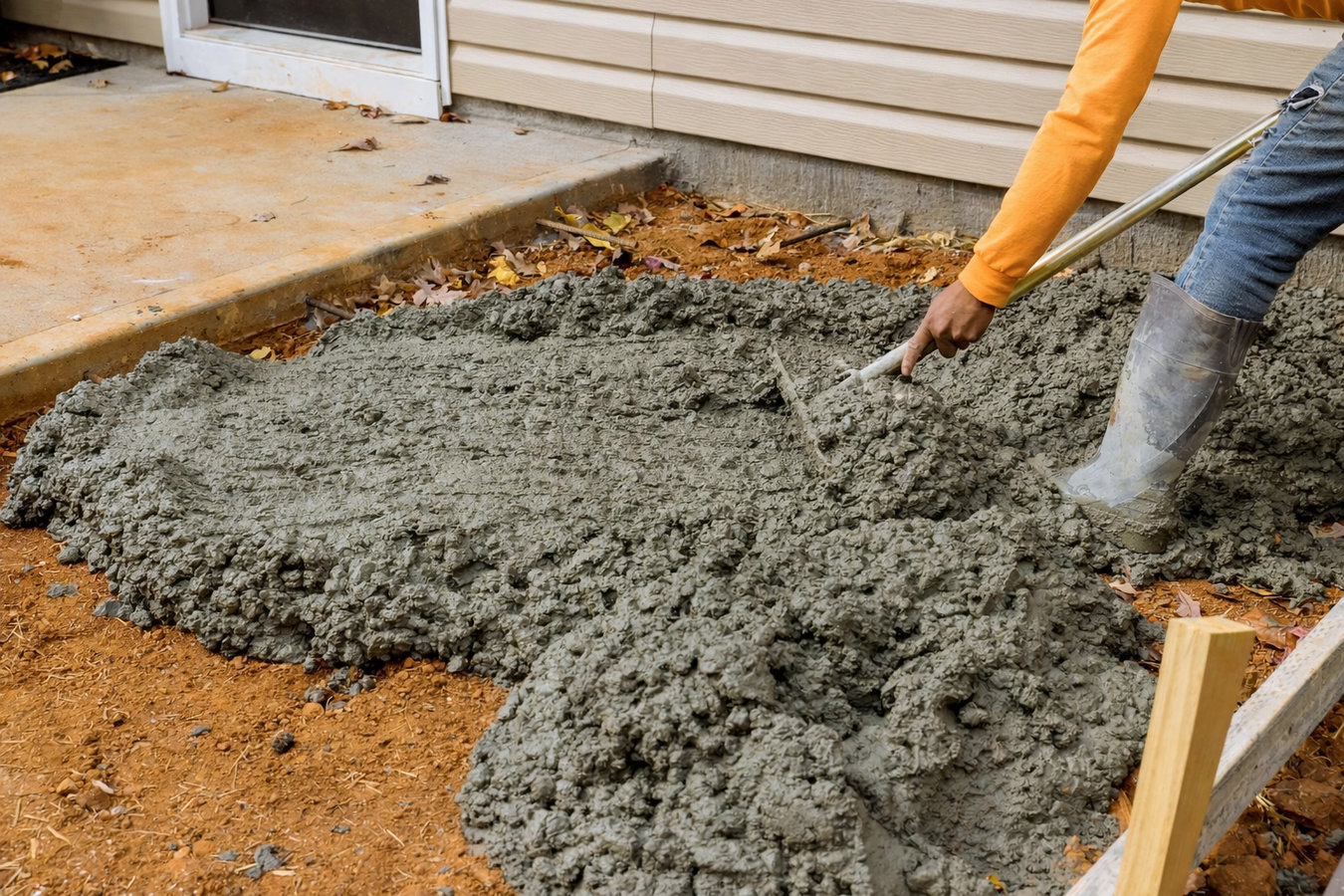
A sunken driveway, patio, or garage floor does not always mean starting over. We pump material under the slab, lift it back to level, patch the holes, and walk you through any drainage fixes - most jobs done in a single day.
Foundation raising in West Lafayette lifts a sunken or uneven concrete slab back to its original position by pumping material - either a cement-soil slurry or expanding foam - through small drilled holes underneath, most jobs completed in a single day with the surface ready for foot traffic the same afternoon.
If your driveway, patio, garage floor, or front stoop has dropped and tilts toward your house, the fix is usually far simpler than a full replacement. West Lafayette's clay-heavy glacial soils expand and contract with every wet spring and dry summer, and freeze-thaw cycles repeat from December through March. That constant movement works its way under concrete slabs, creating voids that cause settling. The slab itself is often still structurally sound - it just needs support restored underneath it.
If a damaged section needs to be cut out before lifting work or the slab has deteriorated beyond repair, our concrete cutting service handles removal cleanly, and we coordinate both steps when a project requires it.
Stand at one end of your driveway, patio, or garage floor and look down the length of it. If it looks like a ramp or has a noticeable low spot, the slab has likely settled. In West Lafayette, this often happens after a wet spring when clay soils absorb moisture and shift beneath the concrete.
If water collects in the same spot every time it rains rather than draining away, the surface has probably dropped in that area. This is especially common in West Lafayette neighborhoods near the Wabash River corridor, where drainage challenges are more pronounced. Pooling water also speeds up further settling, so it is worth addressing sooner.
Walk around the edge of your garage floor, front stoop, or patio and look for a gap where the concrete meets the foundation wall or the house. A gap that was not there before - or one that has grown wider over time - is a clear sign the slab has dropped away from the structure.
A concrete slab should feel solid underfoot. If you notice a slight give, a hollow sound when you tap it, or a section that feels springy, there is likely a void underneath where soil has washed away or compressed. This is a sign the slab needs attention before it cracks or drops further.
We lift settled concrete for driveways, garage floors, patios, sidewalks, front stoops, and basement floors. Before any work is scheduled, we walk the slab in person, assess how much it has settled, check for voids or drainage problems, and explain which lifting method fits your specific situation. We use the traditional cement-soil slurry method for larger, more cost-sensitive jobs and foam injection for jobs where faster curing or smaller holes are a priority. We do not recommend one method for every project - the right choice depends on the slab size, soil conditions, and your timeline.
West Lafayette's soil behavior means drainage is as important as the lift itself. A slab that re-settles two seasons after raising almost always has an unresolved water or grading problem underneath. We point out those issues during the assessment and, where relevant, connect the lifting work to a slab foundation replacement if the concrete has deteriorated past the point where lifting makes economic sense.
The most common residential raising job - lifts a settled driveway panel back to grade with a same-day turnaround and a 24-hour wait before vehicles return.
Lifts settled patio sections that have dropped away from the house or tilted toward a pool edge, restoring a flat, safe surface without tearing out the slab.
Corrects sunken garage floors and front stoops that have dropped away from the foundation, closing the gap and eliminating trip hazards at the entry.
Lifts settled sidewalk panels and step slabs that have created uneven edges - a practical fix before winter when icy conditions make uneven concrete genuinely dangerous.
West Lafayette sits on glacially deposited clay soils that behave differently than the sandy or loamy soils common in other parts of Indiana. Clay absorbs water and expands; dry it out and it shrinks. The ground under your slab literally changes size with the seasons, which is why settled concrete is so common in neighborhoods close to Purdue and along the Wabash River corridor. Add in the freeze-thaw cycles that run from late November through March - where temperatures may cross the freezing mark dozens of times in a single winter - and you have conditions that work against concrete slabs year after year. This is not a defect in the concrete; it is the nature of the soil here.
Homeowners in West Lafayette and Lafayette often see foundation settling worsen after a wet spring or a dry summer because the clay soil is literally changing size underneath the slab. Homes built in the 1940s through 1970s - a large share of the housing stock near campus - have had decades of this movement working against their concrete. Many of those slabs are still structurally sound and respond well to raising. Age alone does not mean replacement is necessary.
When you call, we ask a few basic questions - what type of slab it is, roughly how much it has sunk, and whether you have noticed cracking. We respond within one business day and schedule an on-site visit within a few days. No measurements or answers needed - just describe what you see.
We walk the slab with you, check how much it has settled, look for cracks, and assess drainage around it. This visit usually takes 30 to 60 minutes. You get a written estimate that spells out the scope, method, and total cost - including whether a permit is needed.
Before work day, clear the slab of furniture, vehicles, and planters. If it is a garage floor, move everything out so the crew has full access. The contractor handles all equipment - you just need the area clear and accessible.
The crew drills small holes, pumps material underneath in a controlled way, and checks level frequently as the slab rises. Most residential jobs are finished in a few hours. Holes are patched and the area is cleaned before we leave. You can walk on it the same day.
We visit your property, walk the slab with you, and give you a written quote before any work is scheduled. No pressure, no surprise charges.
(765) 637-4857West Lafayette's clay-heavy soil means a slab can re-settle if the water problem underneath is not addressed. We walk the perimeter before any work and point out drainage issues that should be corrected alongside the lift - so your results last, not just through the first spring.
We do not quote foundation raising over the phone. Slab size, settlement depth, soil conditions, and access all affect the job in ways a phone call cannot capture. We visit, assess, and hand you a written estimate that itemizes every cost before we schedule anything.
Call or message and we get back to you within one business day. Most residential lifting jobs are completed in a single day - we drill, pump, check level, patch, and clean up before we leave. You are not waiting on a multi-day crew to wrap up.
Many homes near Purdue's campus were built in the 1940s through 1970s on soils that have had decades of freeze-thaw cycles working against them. We know the neighborhoods, the soil behavior, and the drainage patterns that cause settling in this area - not just the mechanics of the lift itself.
Foundation raising is a straightforward job when the contractor knows the soil and drainage conditions of the area they are working in. The National Foundation Repair Association sets industry standards for lifting methods, and we follow those practices on every job. Homeowners in West Lafayette who have questions about contractor licensing and permit requirements can verify requirements through the Indiana Attorney General's office.
When a slab needs a section removed or an opening cut before lifting or repair work begins, precision concrete cutting is the starting point.
Learn MoreIf raising is not the right solution and a new slab is needed, our slab foundation team handles full pours from excavation to finish.
Learn MoreWest Lafayette winters are coming. Call us today for a free on-site assessment - most foundation raising jobs can be scheduled and completed before the freeze-thaw season locks in for good.