
Loading...
Serving West Lafayette, IN and surrounding areas. (765) 637-4857
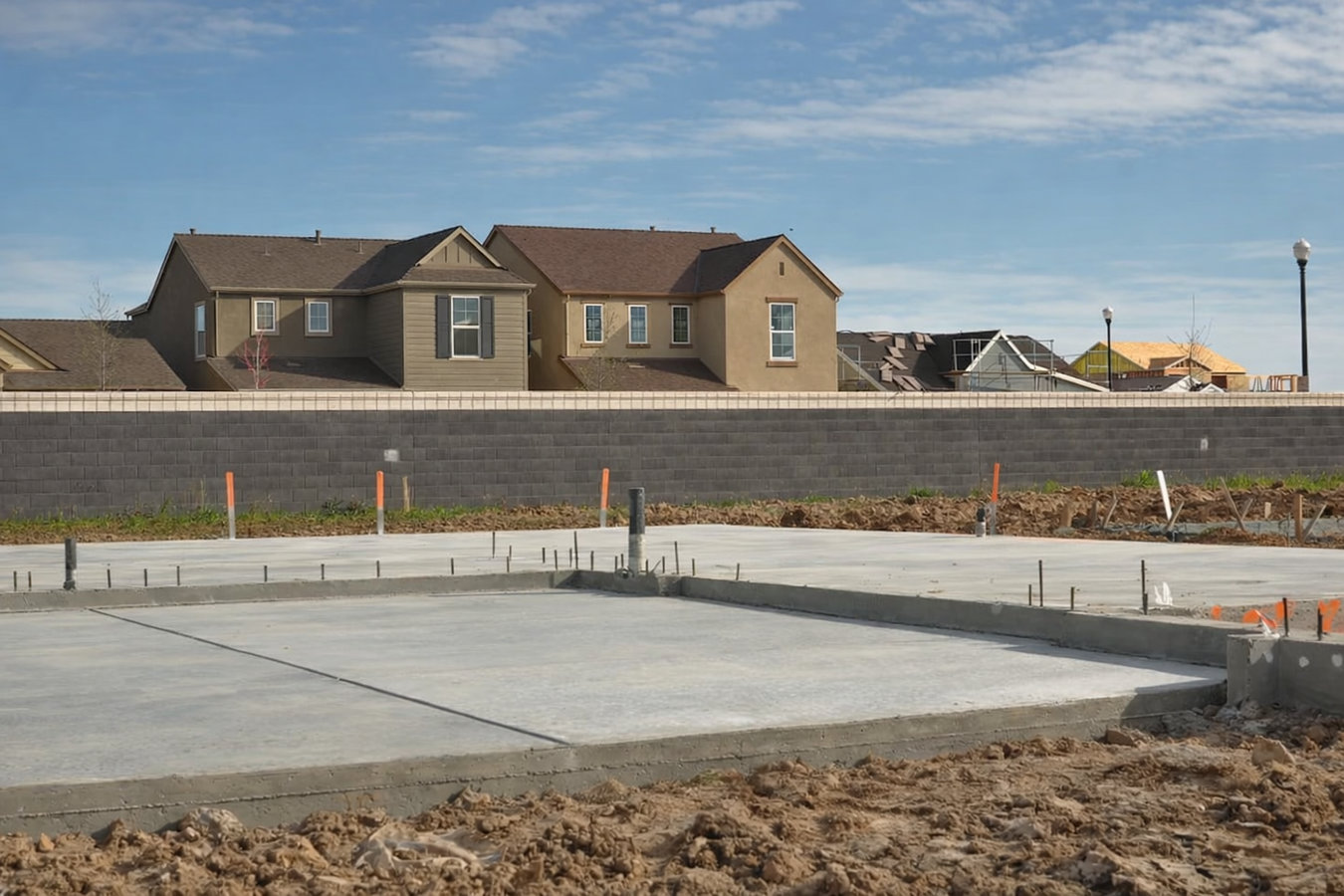
Your slab foundation is the one thing your entire home sits on. We build them right for West Lafayette's clay soils, Indiana winters, and the city permit process - so you never deal with a cracked, heaved, or damp floor later.
Slab foundation building in West Lafayette means pouring a single thick layer of reinforced concrete directly on prepared ground - most residential jobs take one to two days to pour and finish, then require roughly 28 days of curing before framing can begin. The slab serves as both the structural base of your home and the finished floor surface, so proper ground preparation, a moisture barrier, and steel reinforcement are not optional - they are the entire job.
West Lafayette sits on glacially deposited clay soils throughout Tippecanoe County. Clay expands when it gets wet and shrinks when it dries out, which puts repeated stress on a slab that was not prepared with that in mind. The City of West Lafayette also requires a building permit and pre-pour inspection for all new foundation work, so the process involves coordination with the city building department at a specific stage - something an experienced local contractor handles as a matter of course.
Many slab projects connect to deeper foundation work. If your project involves a full basement or crawl space wall rather than a simple slab on grade, our foundation installation service covers that scope. For the concrete footings that sit below and support the slab edges, our concrete footings service handles placement below Indiana's frost line.
If you have a project that requires a structural base - a new home, garage, room addition, or large outbuilding - a slab foundation is likely one of your primary options. A concrete contractor can assess your lot and tell you whether a slab is the right choice given your soil and drainage conditions. This is the most straightforward sign that the service applies to your situation.
If you can see cracks wider than about a quarter inch, or if sections of your floor feel like they are at different heights, the slab beneath may have shifted or settled. In West Lafayette, the clay-heavy soil expands and contracts with seasonal moisture changes, which can cause this kind of movement over time. Sometimes repairs are possible, but in severe cases a new slab may be the more cost-effective long-term solution.
If your concrete floor feels damp, shows white powdery deposits, or has areas where floor coverings are bubbling or peeling, moisture is likely migrating up through the slab. This happens when the moisture barrier underneath the original slab was inadequate or has degraded over time. In West Lafayette's wet springs, this problem tends to show up most clearly between March and May.
Many homes in West Lafayette's older neighborhoods - particularly those built before the 1970s near campus - were constructed before current soil preparation and reinforcement practices were standard. If a contractor or inspector flags the foundation as undersized or improperly prepared during a renovation, it may be time to consider a new slab. This is especially relevant for homes that have been through multiple renovation cycles.
We handle residential slab pours from single-car garages and room additions up to full home foundations. Every slab includes subgrade compaction, a crushed stone drainage layer, a polyethylene moisture barrier, steel reinforcing bar or wire mesh, and a finish suited to the intended use. The slab thickness and reinforcement schedule are determined by what will sit on top of it - a light storage shed needs a different slab than a two-story home. We also build the perimeter footings that tie into the slab edge, keeping them properly placed below Indiana's frost depth. For homeowners whose project includes deeper foundation walls rather than a slab-on-grade approach, our foundation installation service covers poured concrete or block basement walls with waterproofing and drainage.
If your project requires concrete footings as a standalone element - for a porch, a deck support, or a detached structure - our concrete footings service handles that independently. We assess each project in person before providing a written quote, because soil conditions, lot access, and what is going under the slab all affect the scope and the price.
Best for new homes, additions, and garages on flat or gently sloping lots where a basement is not required.
Sized and reinforced for the weight of vehicles or equipment, with the right finish for a working floor.
Matched in thickness and finish to your existing home slab, so the transition is seamless.
Footings poured below Indiana's frost line as part of the slab project, so the edges do not heave in winter.
Tippecanoe County's glacially deposited soils have a high clay content that behaves very differently from sandy or loamy ground. Clay absorbs water during wet springs and swells, then pulls away from the slab edges during dry summers. A contractor who does not account for this soil behavior during preparation - specifically with compaction, gravel drainage, and moisture barrier installation - is building a slab that will show the consequences within a few years. West Lafayette also averages around 130 frost days per year, which means the freeze-thaw cycle hammers any concrete that was not poured and cured with local weather conditions in mind. Scheduling pours outside the safe window - generally late April through October - is a risk some contractors take on rushed projects. We do not.
The city permit and inspection process adds structure to slab work here that protects you as the homeowner. The City of West Lafayette Building and Planning Department requires inspections before the concrete is poured, so the gravel base, moisture barrier, and rebar placement are all reviewed by a city inspector before they are permanently covered. We also serve homeowners in Lafayette and Muncie, where soil conditions and permit requirements follow the same general patterns but may differ in specific details. We know this region and handle those differences as part of every project.
For more on concrete construction standards relevant to slab work, the Portland Cement Association publishes guidance on slab-on-grade construction and cold-weather concreting practices that reflect the same standards we apply on every West Lafayette pour.
We ask about the size of the slab, intended use, lot conditions, and your timeline before scheduling a site visit. On-site assessment is the only way to accurately price soil conditions and access. You will receive a written estimate within a few days - never a rough phone quote.
We apply for a building permit from the City of West Lafayette Building and Planning Department before any work begins. This typically takes a few business days to a couple of weeks. We handle the application and will provide you a copy of the permit - no permit means no work starts.
The crew grades the area flat, compacts the soil, lays a gravel drainage layer, and spreads a plastic moisture barrier. Any plumbing or electrical conduit running under the slab is installed and inspected at this stage - before a drop of concrete goes in.
Steel rebar or wire mesh is placed on top of the moisture barrier, then the city inspector visits to confirm preparation meets local requirements. After the pour and finishing, the slab cures for roughly 28 days before framing begins. The permit is closed out with final documentation for your records.
Spring contractor slots fill fast in this market. We respond within 1 business day and always visit the site before giving you a written price.
(765) 637-4857The glacially deposited clay ground around West Lafayette expands and contracts with every wet spring and dry summer. We account for local soil conditions on every project - from gravel base depth to slab thickness - so your foundation holds up through Indiana's freeze-thaw cycles for decades.
The City of West Lafayette requires inspections before the concrete is poured, and a failed inspection means costly delays. We handle the permit application from start to finish and schedule inspections proactively so your project stays on schedule and on the record.
Indiana's wet springs and Tippecanoe County's clay soils create real pressure on any slab not properly sealed from the start. We install a proper moisture barrier and drainage layer under every slab we pour - so your floors do not buckle, stain, or smell damp when April arrives.
We respond to every inquiry within one business day and always visit the site before giving you a price. You get a written, itemized estimate you can compare side by side with other quotes - no vague numbers or surprise line items on the invoice.
The American Concrete Institute sets the professional standards for concrete mixing, placement, and curing that our work is aligned with. Every slab we pour reflects those standards alongside the specific demands of building in Tippecanoe County.
Full-depth concrete foundation walls for new homes and additions, with waterproofing and drainage built in from the start.
Learn MoreThe structural base that sits below every slab and foundation - properly sized and placed below Indiana's frost line.
Learn MoreSpring booking slots fill fast in this market - reach out now and we will lock in your start date before the ground thaws and the rush begins.